

West Virginia
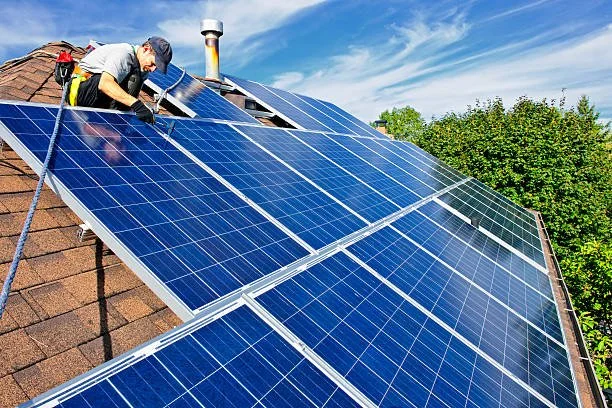
West Virginia’s solar market is poised for growth in 2026, though it has historically lagged behind most U.S. states. Currently contributing less than 1% of the state’s electricity, utility-scale solar projects are slowly transforming the landscape. Companies like Mon Power and Potomac Edison are building plants such as the 5.75 MW Berkeley County facility, while new approvals include 90 MW in Kanawha County and 100 MW in Mason County. Federal incentives and state programs, including the upcoming Solar for All initiative, are making solar development increasingly viable for residential, commercial, and utility-scale projects.
The near-term potential is enormous. West Virginia has a solar project pipeline that could reach over 6,700 MW if fully realized, representing a massive leap from today’s modest capacity. Expansion will create construction and long-term jobs, generate tax revenue, and provide clean energy for neighboring high-demand markets like Virginia, Maryland, and Pennsylvania. With national trends showing solar dominating new power capacity—84% of new U.S. additions in 2024—the state is positioned to attract both institutional investors and corporate energy buyers seeking stable, long-term returns.
Now is the time to act. Developers, investors, and corporate buyers have a rare opportunity to secure prime solar sites and favorable agreements before the market accelerates. The combination of regulatory approvals, strong federal incentives, and a large, growing pipeline makes 2026 a pivotal year to enter West Virginia’s solar sector. Don’t wait to watch the transition—partner now, claim your share of the projects in progress, and lock in value for decades to come.
Over the past decade, wind power in West Virginia has seen steady but modest growth. From 2015 to 2025, installed wind capacity nearly doubled, reaching roughly 860 MW by 2023. This growth has largely come from utility-scale projects in the state’s mountainous eastern counties, including Mount Storm, Pinnacle, and Black Rock wind farms. While these additions expanded West Virginia’s renewable portfolio, wind still generates only a small share of total electricity in the state, with coal remaining the dominant energy source.
A key trend in recent years has been the repowering of older wind farms. Facilities like Mount Storm and Pinnacle have replaced older turbines with larger, more efficient models, boosting energy output without adding new turbines. This approach not only increases capacity but also extends the operational lifespan of the projects, while bringing economic benefits such as construction jobs, technical positions, and local tax revenues. Federal incentives and corporate power purchase agreements, like deals with Microsoft, have also played a significant role in supporting these investments despite relatively weak state-level renewable mandates.
Looking forward, West Virginia’s wind sector is likely to continue gradual expansion. New projects, such as the proposed Catamount Wind Farm, and further repowering of existing sites will increase capacity and efficiency. However, without stronger state-level policy support, wind will probably remain a smaller portion of the state’s overall electricity mix compared to coal. Technological improvements, corporate renewable commitments, and federal incentives will be the main drivers of growth, potentially positioning West Virginia as a modest but reliable contributor to regional wind energy in the coming decade.
West Virginia’s Electric Vehicle Infrastructure Plan is anchored in the federal National Electric Vehicle Infrastructure (NEVI) Formula Program, which directs funding and strategic deployment of public charging stations. Under this program, West Virginia is slated to receive roughly $45–$47.5 million over five years to build out EV charging infrastructure principally along major travel corridors such as Interstates 64, 77, 79, 70, 68, and 81. Stations funded under Phase 1 of the plan must be spaced approximately every 50 miles on these designated Alternative Fuel Corridors (AFCs), with each station required to have at least four high‑power (150 kW+) fast charging ports, accessible 24/7, and compliant with federal requirements for payment, accessibility, and data reporting.
Despite the clear strategic framework, existing infrastructure remains limited compared with projected demand. Recent state data shows that EV ownership and sales have been increasing—there were 2,438 registered EVs in 2023, and 17 new public charging stations were constructed that year—but overall penetration remains low relative to other states. According to alternative fuel data sources, West Virginia has over 550 public EV charging ports currently, but that includes a mix of Level 2 and slower stations, and the number of DC Fast Charging (DCFC) stations critical for long‑distance travel is still modest. Analysts estimate that NEVI‑funded projects alone will deliver approximately 660 public EV charging ports through Phases 1 and 2, a meaningful step but still just a portion of what the state will ultimately require to support broader EV adoption by 2030.
Phase 2 of West Virginia’s EV plan goes beyond interstate corridors to emphasize community‑based charging access, particularly in underserved, rural, and lower‑income areas. The plan commits at least 40 % of NEVI investments to disadvantaged communities in alignment with the federal Justice40 Initiative, aiming to ensure equitable deployment of infrastructure and to accelerate EV adoption statewide. The state’s legislative framework (e.g., House Bill 4797) also calls for a holistic view of infrastructure needs, factoring in school systems, public transportation, municipal fleets, and private users in future build‑out decisions, positioning West Virginia to respond to localized charging demands as the market evolves.
Despite the clear roadmap and available federal funding, implementation has seen logistical and procurement delays, underscoring the need for proactive coordination between state agencies, private developers, and utilities. In some cases, requests for proposals and vendor contracts for infrastructure development extended beyond original timelines, illustrating that strategic public‑private collaboration will be essential to accelerate deployment and attract investment.
For CEOs and business owners considering strategic investments, West Virginia’s EV infrastructure build‑out represents not just a compliance necessity but a compelling economic opportunity. As the state transitions toward a more electrified transportation ecosystem, there is room for innovative partnerships in charging station development, utility services, retail and travel‑oriented site hosting, fleet electrification services, and software platforms for network management and payments. Leveraging federal NEVI funding as a foundation, forward‑thinking enterprises can position themselves as first‑movers in a growing market, unlock new revenue channels, enhance customer engagement at retail and hospitality sites, and directly contribute to a cleaner, more connected transportation future in the Mountain State.