Vermont
As of 2026 and moving forward, Vermont continues to support both residential and commercial solar projects, but the landscape of incentives and regulations has shifted, affecting project economics and planning. For residential solar, a major change came with the expiration of the 30 % federal Investment Tax Credit (ITC) for homeowners at the end of 2025. This credit had significantly lowered the upfront cost of installing rooftop solar, and its removal makes new installations more expensive. Vermont still provides sales and property tax exemptions for residential solar, but the loss of the federal credit means homeowners will need to rely more heavily on these state-level benefits to make projects financially viable.
Vermont’s net metering program, which allows homeowners to receive credits for excess electricity fed back to the grid, has also evolved. Compensation rates have been reduced over several updates, and the rules now limit net metering to systems located on the same or adjacent parcel, effectively ending broader community or virtual net metering arrangements. While these changes slow the growth of small-scale solar, legislative proposals in 2026 aim to stabilize net metering compensation and reduce bureaucratic barriers, potentially making rooftop solar more accessible and predictable for homeowners in the near future.
For commercial solar, Vermont’s stance remains relatively favorable, largely due to continued federal incentives. Commercial and non-residential projects still qualify for the Section 48/48E federal ITC, offering a 30 % base credit with additional potential bonuses for domestic content or low-income energy projects, provided construction begins by mid-2026. Businesses also benefit from accelerated depreciation under MACRS, which can improve first-year tax savings. State-level incentives like sales and property tax exemptions apply to smaller systems, but broader state rebates for commercial solar are limited. Net metering for commercial installations typically provides lower per-kWh compensation compared to past programs, and larger projects require a Certificate of Public Good (CPG) and more detailed permitting.
Overall, Vermont is balancing its commitment to achieving 100 % renewable electricity by 2035 with evolving policy mechanisms. Residential solar faces challenges without federal tax credits and with reduced net metering compensation, while commercial solar remains economically attractive through federal programs in 2026. The state’s focus is increasingly on distributed generation located on-site or adjacent to energy loads, while legislative efforts continue to refine net metering rules, streamline permitting, and encourage co-located renewable projects. This approach aims to ensure that solar remains a significant component of Vermont’s clean energy future while aligning incentives with grid reliability and long-term renewable energy goals.

Vermont positions wind energy as a cost‑competitive and reliable way to hedge against rising electricity prices for businesses. Wind power on a utility scale in the U.S. typically generates electricity at roughly $30–$50 per MWh (3–5 ¢/kWh)—often below conventional power costs—making long‑term wind contracts attractive for commercial customers with high energy use. National estimates show land‑based wind’s levelized cost around $30/MWh and competitive with or cheaper than fossil fuels; while small commercial wind (distributed) may cost more upfront (~$174/MWh), utility‑scale sourcing remains among the lowest‑cost options available. Businesses that integrate wind (or contract with wind‑focused utilities) can lock in that lower cost to reduce volatility in operating expenses compared to the regional average Vermont commercial electricity rate of about 17 ¢/kWh.
However, the economics and permitting landscape matter. Vermont currently has about 149 MW of installed wind capacity from five utility‑scale wind farms, which contributes roughly one‑sixth of total in‑state electricity generation. While state policy supports renewables broadly and studies suggest wind could provide up to 25 % of Vermont’s energy by 2032 in an optimal build‑out scenario, actual project development is careful and paced to balance community and environmental concerns. For smaller, on‑site commercial turbines, costs per installed kilowatt can be significant, and payback periods vary with wind resource quality and federal or local incentives, so detailed site assessments and financial modeling are key before committing capital.
For business owners focused on real bottom‑line impacts, Vermont’s wind stance translates into a clear message: wind power offers some of the lowest long‑run energy costs available in the region and can protect your business from volatile utility prices, but the time to act is now. Waiting risks missing federal and regional incentive windows, higher future energy rates, and losing competitive advantage to peers investing in renewables today. If you want to lock in energy cost savings and strengthen your sustainability profile—while aligning with Vermont’s clean energy direction—develop your wind strategy now or be prepared to pay more later.

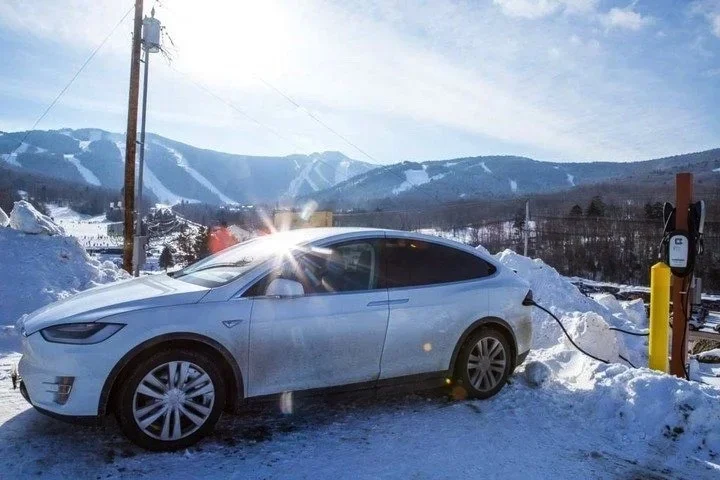
Vermont has made EV charging deployment a strategic part of its climate and transportation planning. The state is improving its charging network both to support increasing EV adoption and to meet equity and accessibility goals. According to the latest state legislative report, Vermonters already enjoy one of the highest per‑capita public charging station densities in the U.S., but projections show a need for thousands more Level 2 and DC fast charging ports if the state hits anticipated EV growth by 2030. In addition to public infrastructure goals, Vermont aims for direct current fast chargers (DCFC) to be within a 25‑mile spacing on key corridors, targeting highway and community access.
To accelerate deployment, Vermont is blending federal, state, and utility support. The National Electric Vehicle Infrastructure (NEVI) program has been a central federal funding source, with the state obligating tens of millions for charging stations and preparing further solicitations to target roughly 19 additional sites in 2026. However, earlier disruptions occurred when the NEVI program was paused at the federal level, stalling some projects—though efforts continued to re‑engage funding under revised guidance. Meanwhile, Burlington and other municipalities are leveraging their own grants to install hundreds of new charging ports, and utilities like Green Mountain Power provide rebates for workplace and commercial installations.
Vermont also encourages commercial station deployment through tax and incentive programs. Businesses, nonprofits, and municipalities can access federal Alternative Fuel Vehicle Refueling Property tax credits worth up to 30 % of equipment/installation costs (capped at $100,000 per port) through mid‑2026, making commercial charger projects more financially feasible. At the state level, Charge Vermont continues to fund hardware installation at workplaces, multi‑unit residences, and public attractions, providing technical assistance and sometimes covering most project costs.
Despite progress, challenges remain—especially around fast chargers in rural regions and ensuring a cohesive network for long‑distance travel. EV drivers and stakeholders have noted gaps in high‑speed DCFC access between key destinations, highlighting opportunities for strategic commercial deployments that fill those underserved corridors. Beyond coverage, evolving federal “Buy America” content requirements could impact equipment sourcing and timeline planning as projects move forward.
If you’re a business or developer looking to be part of Vermont’s EV charging future, now is prime time to engage. With committed federal funds, state incentives, and growing demand from EV drivers, partnering on commercial charging infrastructure can boost visibility, drive foot traffic, and align with sustainability goals. Collaborating with experienced installers and leveraging tax credits and state programs like Charge Vermont can significantly reduce upfront costs while positioning your sites as critical hubs in the Green Mountain State’s EV ecosystem. Let’s work together to turn those plans into profitable progress!