

Texas
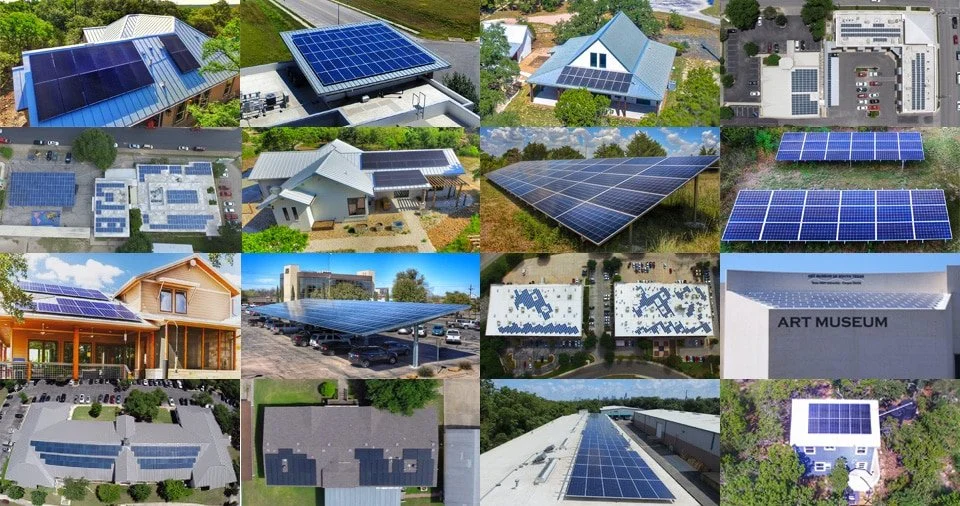
As Texas progresses through 2026 and beyond, the commercial and residential solar markets continue to mature under evolving federal incentives, expanding utility programs, and strengthened state regulatory oversight. Commercial solar development remains particularly robust, driven by favorable tax treatment, strong corporate demand, and long-term energy cost stabilization strategies. Businesses may still qualify for the federal Investment Tax Credit under Section 48/48E, which can provide up to a 30% tax credit for projects that meet prevailing construction commencement requirements. In addition, Texas offers a valuable property tax exemption that prevents the added value of a solar installation from increasing a property’s tax assessment. Major transmission and distribution utilities, including Oncor, continue to administer structured commercial incentive programs with significant funding allocations. At the utility-scale level, long-term renewable energy procurement agreements—such as those involving TotalEnergies supporting operations for Google—underscore sustained institutional confidence in Texas as a premier solar market.
On the residential side, 2026 represents a transitional yet strategically important period. Although the federal 30% residential solar tax credit has phased out for new installations under current federal law, Texas homeowners continue to benefit from a 100% property tax exemption on the value added by a solar energy system. Select municipal utilities, including Austin Energy, maintain rebate and performance-based incentive programs, while customers in deregulated markets retain the ability to select retail electricity providers offering solar buyback plans. Concurrently, enhanced consumer protection measures enacted under the Residential Solar Retailer Regulatory Act require registration through the Texas Department of Licensing and Regulation by September 2026, promoting greater transparency, accountability, and professionalism across the industry.
In an environment characterized by energy price volatility, increasing peak demand, and heightened focus on grid resilience, solar generation—particularly when integrated with battery storage—has evolved into a strategic asset rather than a discretionary upgrade. For commercial stakeholders, properly structured solar investments can strengthen balance sheets, reduce operational exposure to rising utility costs, and support sustainability objectives. For homeowners, solar provides enhanced control over long-term energy expenditures and contributes to property value stability. In both segments, early planning, disciplined project structuring, and alignment with available incentives remain essential to optimizing financial performance.
If you are a CEO, business owner, administrator, or homeowner seeking a comprehensive evaluation of how solar can be strategically integrated into your property or portfolio, we invite you to complete our contact form. Upon submission, a qualified solar specialist will conduct a preliminary assessment and contact you within 24 hours to discuss tailored solutions aligned with your operational objectives, financial considerations, and implementation timeline.
Texas’s stance on wind turbine development has generally been pro-growth, market-driven, and infrastructure-focused, rather than mandate-driven. The state does not frame wind energy as a replacement for fossil fuels, but as an additional competitive resource within its broader energy portfolio.
A major turning point came in 1999 when Texas adopted a Renewable Portfolio Standard and expanded the competitive electricity market overseen by the Electric Reliability Council of Texas. Lawmakers also approved the Competitive Renewable Energy Zones (CREZ) transmission build-out, which funded billions of dollars in high-voltage lines to move wind power from West Texas and the Panhandle to major cities. This infrastructure commitment signaled that the state supported large-scale wind deployment as an economic opportunity.
Politically, Texas leadership has typically supported wind development when it aligns with private property rights, rural landowner income, and market competition. Many rural counties have benefited from lease payments, tax revenue, and job creation tied to wind farms. However, the state has resisted aggressive renewable mandates and continues to strongly defend oil and natural gas production as central to the Texas economy.
After Winter Storm Uri in 2021, scrutiny increased on all energy sources, including wind. While there were discussions about grid reliability reforms and weatherization requirements, Texas did not scale back wind development. Instead, the overall stance remains consistent: encourage generation of all types—wind, natural gas, solar—so long as it supports reliability, economic growth, and competitive pricing within the state’s energy-only market structure.
For investors, these projects offer multiple participation pathways, including equity partnerships, tax-advantaged structures, long-term power purchase agreements, and infrastructure-backed returns. Wind energy in Texas continues to benefit from scale, transmission access, and long-term demand fundamentals.
If you are interested in learning more about current or upcoming opportunities, please complete our investor inquiry form. A member of our Wind Energy Department will review your submission and contact you within 24 hours to discuss project details, timelines, and investment options tailored to your objectives.


Texas’s approach to commercial electric vehicle (EV) charging stations in 2026 and beyond is both strategic and infrastructure-focused, combining clear regulatory oversight with ongoing deployment initiatives and collaboration with federal programs and the private sector. The Texas Department of Licensing and Regulation (TDLR) has established a comprehensive framework requiring commercial EV charging equipment to be registered and maintained in accordance with safety, consumer protection, and transparency standards. Operators must provide clear pricing information and ensure proper equipment operation, with compliance deadlines phased through 2025 and 2026. (tdlr.texas.gov)
Rather than relying heavily on state-level subsidies, Texas is leveraging federal programs such as the National Electric Vehicle Infrastructure (NEVI) Formula Program to expand charging networks along major travel corridors. The Texas Department of Transportation reports that numerous NEVI-funded stations have been completed or are under construction, with plans to expand to hundreds of locations through 2026, reflecting the growing adoption of EVs across the state. (txdot.gov) In addition, federal tax incentives, including the Alternative Fuel Infrastructure tax credit (Section 30C), continue to support businesses investing in charging infrastructure, while local and utility-level grants provide supplemental opportunities. (flo.com)
Cities and private enterprises are actively responding to market demand by installing chargers at commercial properties, retail centers, travel hubs, and public facilities, enhancing accessibility for EV drivers across the state. (mysanantonio.com) Texas’s policies prioritize practical infrastructure deployment, interoperability standards, and cooperation with private partners, enabling a robust and reliable EV charging network while encouraging continued investment.
For businesses interested in incorporating innovative EV charging solutions into their properties, this represents a prime opportunity to engage with a growing market, attract new customers, and enhance sustainability initiatives. If you would like to explore how EV charging can be integrated into your building, please complete our contact form, and one of our specialists will reach out within 24 hours to provide personalized guidance and solutions.