

Solar Parking Lots
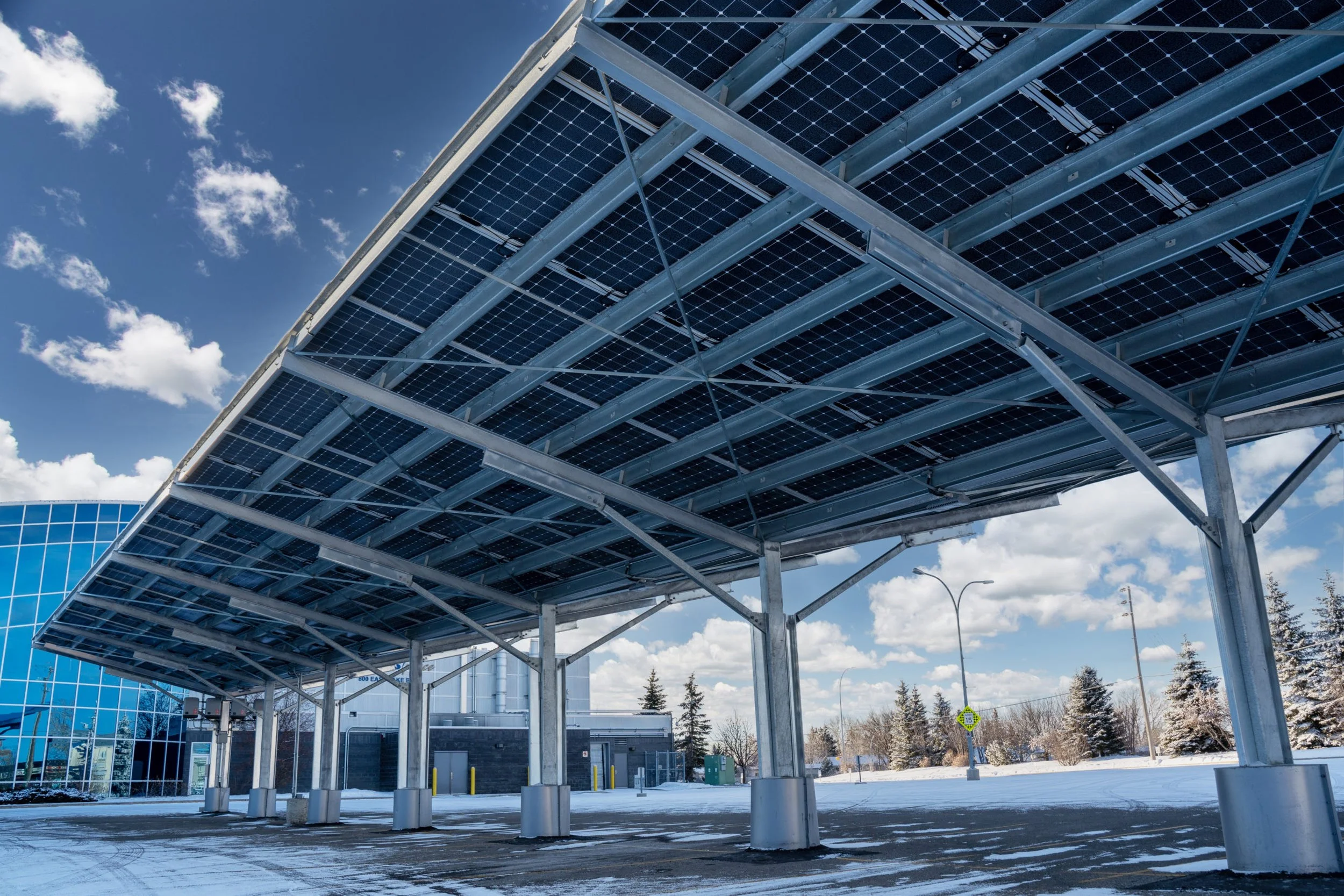
One significant advantage of parking lot solar projects is efficient land use. Parking lots are expansive, paved areas that often sit underutilized beyond vehicle storage. Installing solar canopies above these spaces maximizes the utility of existing infrastructure without requiring additional land acquisition, preserving greenfield areas and minimizing environmental disruption. This dual-purpose approach allows organizations to generate renewable energy while maintaining their essential parking capacity, providing a highly strategic solution for urban and suburban developments where land is limited.
Another notable benefit is energy cost savings and resilience. Solar canopies installed over parking areas can generate substantial amounts of electricity, which can be used on-site to offset energy consumption from buildings, lighting, and electric vehicle charging stations. Over time, these systems reduce operational costs and protect organizations against fluctuating energy prices. Additionally, integrating energy storage solutions enhances resilience by providing backup power during grid outages, making parking lot solar projects not only an environmentally sustainable choice but also a financially and operationally strategic investment.
A third advantage is enhanced sustainability and corporate image. Visible solar canopies convey a strong commitment to renewable energy and environmental stewardship, which can positively influence public perception and stakeholder engagement. This can be particularly important for businesses seeking to meet ESG (Environmental, Social, and Governance) goals or to qualify for sustainability certifications. Beyond aesthetics, the shading provided by solar canopies also improves comfort for parked vehicles, reducing heat buildup and protecting cars from weather exposure, demonstrating a practical and community-conscious design approach.
Building solar projects over parking lots—often called solar canopies—offers clear sustainability benefits, but there are several notable drawbacks. First, capital costs are significantly higher compared to traditional ground-mounted solar systems. In addition to photovoltaic panels and electrical infrastructure, developers must fund steel canopy structures, engineered foundations, drainage modifications, and in some cases lighting integration. These added structural and civil components can increase total project costs by 30–100% relative to standard installations, making financing more complex and lengthening return-on-investment timelines.
Second, construction complexity and operational disruption present meaningful challenges. Parking lot solar projects require detailed site engineering to accommodate vehicle circulation, ADA compliance, stormwater management, and existing underground utilities. Installation often disrupts normal parking operations, potentially affecting tenants, customers, or employees. Projects located at commercial centers, hospitals, or campuses must phase construction carefully to minimize business interruption, which can extend project schedules and increase soft costs.
Third, long-term maintenance and structural considerations add ongoing risk. Unlike ground-mounted systems, canopy installations must withstand vehicle impacts, snow loads, wind uplift, and corrosion from de-icing salts. Maintenance crews may require specialized equipment or traffic control measures to service the systems safely. Additionally, liability exposure can increase due to the integration of electrical infrastructure above active vehicle areas, requiring enhanced insurance coverage and rigorous compliance with local building codes and safety standards.