North Dakota
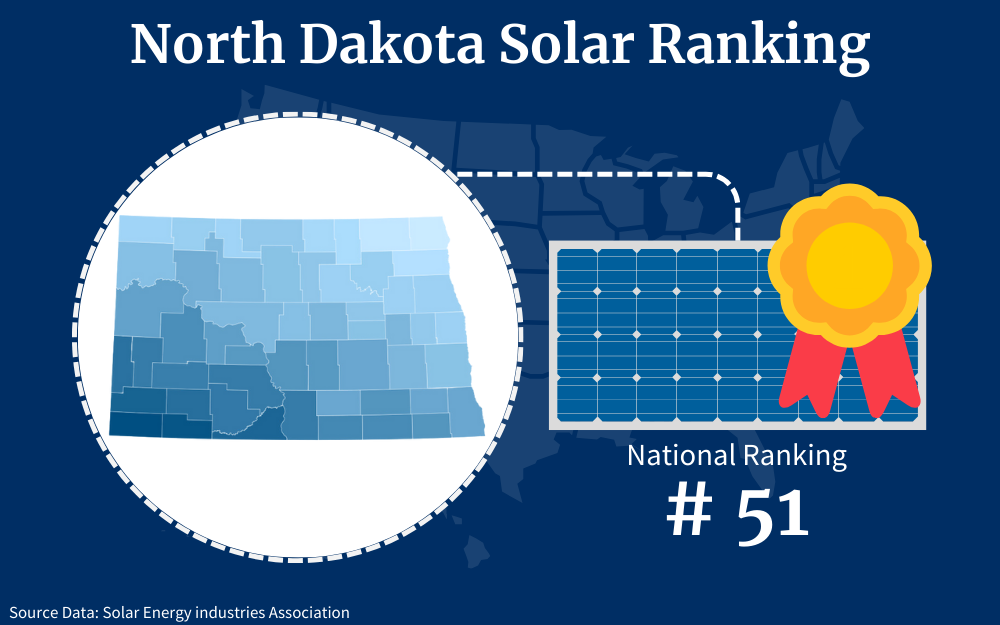
As of 2026, North Dakota maintains a cautious but permissive stance toward solar power. The state allows customer-owned solar systems and continues to support net metering for qualifying customers of investor-owned utilities, enabling homeowners and businesses to receive credit for excess electricity sent back to the grid. A five-year property tax exemption for renewable energy equipment remains one of the primary state-level incentives. However, North Dakota does not have a mandatory Renewable Portfolio Standard, relying instead on voluntary goals, and it does not offer broad statewide rebates or aggressive solar mandates. Compared to some neighboring states, its policy framework is relatively modest and market-driven rather than mandate-driven.
Financially, the economics of solar in 2026 are more influenced by federal policy changes than by state action. With major federal tax incentives stepping down after 2025, residential solar growth may slow somewhat, particularly in rural areas where upfront costs are a larger barrier. At the same time, utility-scale solar projects are gradually being introduced, though solar still represents a small share of the state’s overall energy mix compared to wind and fossil fuels. Workforce development efforts, including renewable energy training expansions at institutions such as Lake Region State College, signal measured support for diversification of the energy sector.
Looking ahead, solar growth in North Dakota is expected to continue steadily but not rapidly. Policy signals from state leadership have generally emphasized energy reliability and traditional resources, meaning solar expansion will likely depend on project economics, utility planning decisions, and broader federal energy policy rather than new state mandates. In short, solar power is allowed and gradually expanding, but it is not being aggressively championed at the state level as a primary energy strategy moving forward.
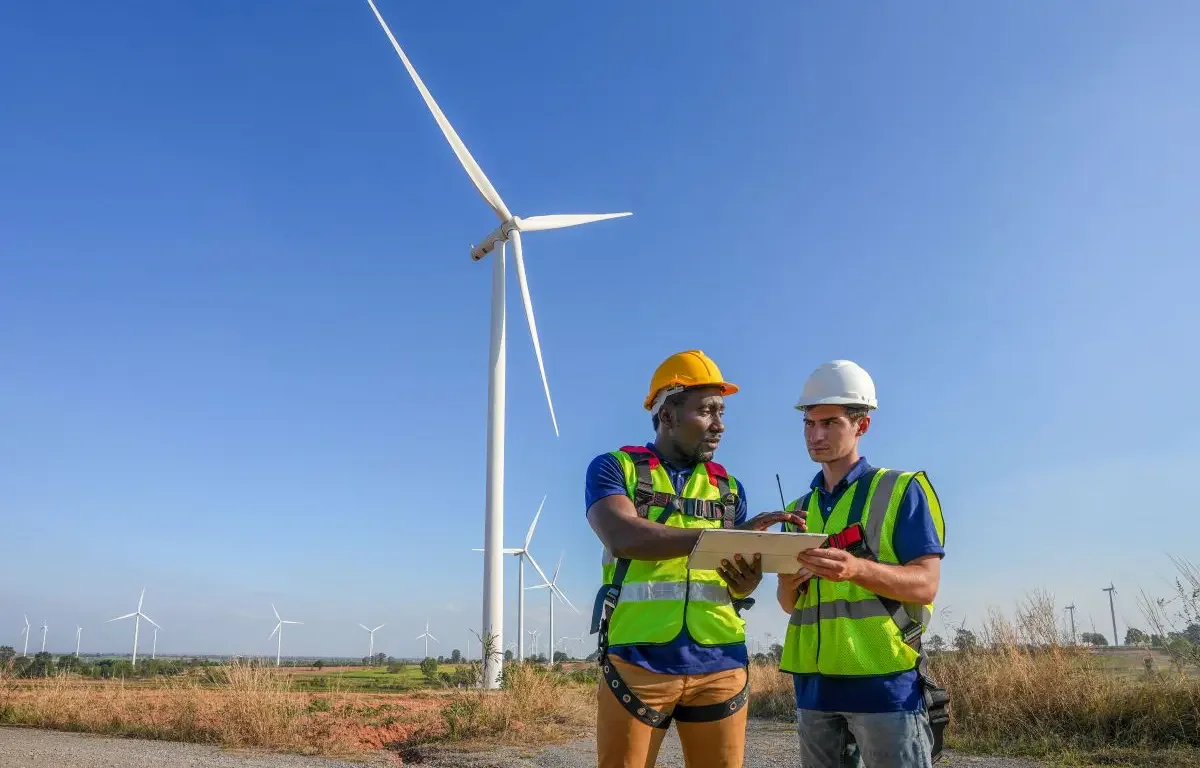
North Dakota continues to strengthen its position as a national leader in onshore wind energy as it moves through 2026 and into the late 2020s. With strong and consistent wind resources across the Great Plains, the state has built thousands of megawatts of installed capacity, and wind supplies a significant share of its electricity generation. Ongoing development includes both new large-scale wind farms and the repowering of older sites, where existing turbines are upgraded with longer blades, improved generators, and advanced control systems to increase output and extend operational life. These improvements allow projects to generate more electricity at lower wind speeds while making better use of existing infrastructure.
Looking ahead, wind turbine technology in North Dakota is expected to focus on larger, more efficient machines with taller towers and smarter digital monitoring systems. Modern turbines use advanced sensors and grid-responsive controls to improve reliability and better integrate with regional transmission networks, especially as power is exported to neighboring states. Developers are also aligning projects with federal production tax incentives and state-level support programs, which help reduce costs and encourage continued private investment in rural areas.
Beyond generation capacity, the future of wind energy in North Dakota will increasingly depend on grid modernization and energy storage integration. As wind penetration grows, utilities are expected to expand battery storage, transmission upgrades, and hybrid energy systems to ensure stable delivery during variable wind conditions. These developments support not only cleaner energy production but also long-term economic growth, including manufacturing, construction, and technical workforce opportunities tied to the expanding wind sector.
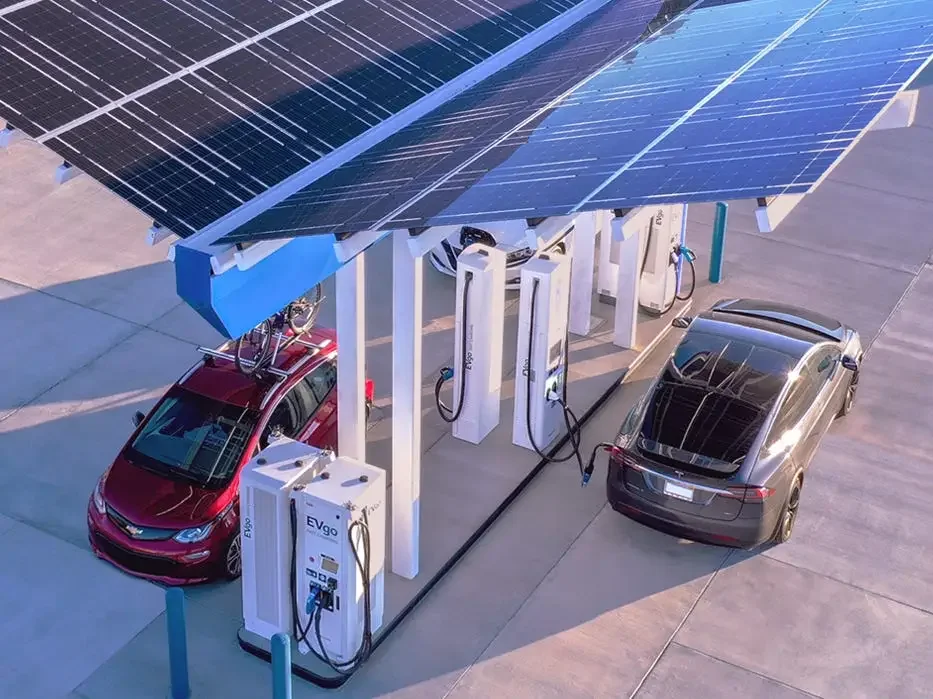
Through 2026 and beyond, North Dakota is accelerating the buildout of electric vehicle (EV) charging infrastructure, driven largely by federal investment and public-private partnerships. The state is receiving approximately $25.9 million through the National Electric Vehicle Infrastructure Program (NEVI) to develop DC fast-charging stations along major travel corridors, with the goal of placing high-speed chargers roughly every 50 miles and within close proximity to interstate exits. In addition, North Dakota has secured funding through the Advanced Transportation and Congestion Management Technologies Deployment Program to expand fast-charging access into rural communities, supporting up to 16 smaller towns with community-based infrastructure. Oversight and implementation are coordinated by the North Dakota Department of Transportation, which is prioritizing privately owned and operated sites—meaning local businesses play a central role in deployment.
Although EV adoption in North Dakota remains modest compared to national averages, that gap represents opportunity. Limited charging infrastructure has historically constrained growth, but as corridor charging becomes reliable and visible, adoption typically follows infrastructure expansion. For CEOs and property owners with excess parking capacity—particularly near highways, retail centers, office campuses, hotels, travel plazas, and multi-family housing—this is a strategic inflection point. Federal programs can cover a substantial portion of capital expenditures, significantly reducing upfront risk while allowing site hosts to retain ownership, set pricing, and benefit from long-term revenue streams. Beyond direct charging revenue, EV drivers typically spend 20–40 minutes onsite during fast-charging sessions, increasing dwell time and boosting retail, food, and service sales.
For business leaders evaluating capital allocation, EV charging is not merely an amenity—it is infrastructure aligned with long-term transportation trends. Early adopters in emerging markets often secure prime corridor locations, build brand loyalty with EV drivers, and position their properties as forward-thinking destinations for tenants and customers. If you have underutilized parking assets, this is an opportunity to convert idle square footage into income-producing infrastructure, supported by federal funding and growing national demand. Forward-looking businesses that act now can establish themselves as charging hubs before the market becomes saturated—turning a simple parking lot into a competitive advantage.
If you are interested in exploring innovative ways to integrate EV charging and renewable energy solutions into your existing infrastructure, we invite you to complete our contact form. One of our EV team members will review your inquiry and respond within 24 hours to discuss customized opportunities tailored to your property and long-term business objectives.