

Massachussetts
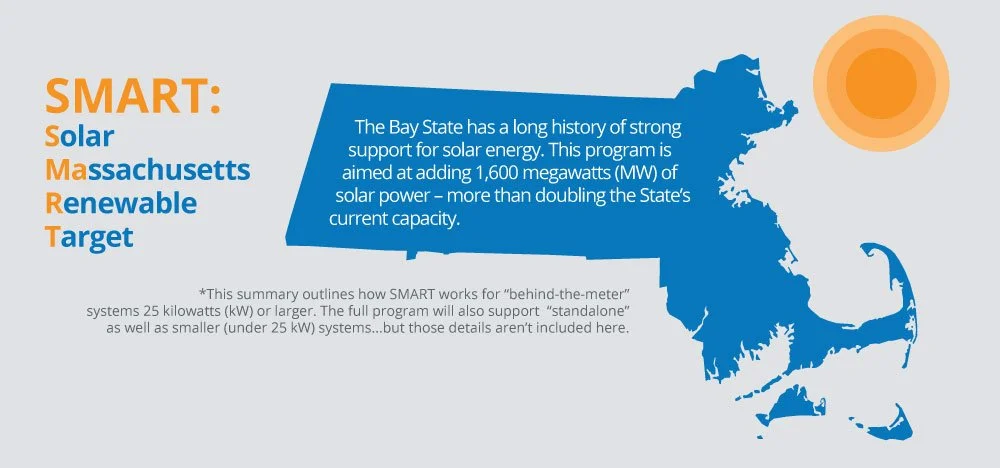
Massachusetts is positioning itself as a leader in commercial solar energy, driven by its updated Solar Massachusetts Renewable Target (SMART 3.0) program. The state’s redesigned incentive structure emphasizes performance-based payments and prioritizes rooftop, canopy, brownfield, and landfill solar projects. By providing predictable annual incentive assessments, Massachusetts aims to accelerate distributed solar deployment while maintaining cost-effectiveness for commercial developers. Complementary policies, including updated net metering rules and initiatives to promote solar canopies, further enhance the economic viability of commercial installations across diverse sites.
Federal incentives remain a significant driver for commercial solar adoption. The Investment Tax Credit (ITC) continues to offer a 30% reduction in total project costs for qualifying commercial projects, provided construction begins and is placed in service within defined timelines. Massachusetts developers are therefore presented with a critical window through 2026 to maximize stacked benefits from both state and federal programs. Additional state-level incentives, including net metering credits, sales tax exemptions on equipment, and revenue from Renewable Energy Certificates (RECs), contribute to improved project economics and predictable long-term returns.
The market outlook for commercial solar in Massachusetts remains robust, supported by historically strong deployment and renewed policy momentum under SMART 3.0. Large rooftops, industrial facilities, and parking canopy installations present the greatest opportunities for expansion, particularly as the state emphasizes performance-based incentives and grid integration benefits. While the market has experienced slower growth relative to leading solar states, the combination of stable policies, targeted incentives, and growing corporate sustainability initiatives is expected to drive continued investment in commercial-scale projects through 2026 and beyond.
Challenges remain, particularly with respect to interconnection timelines, permitting processes, and evolving utility rate structures. Annual incentive caps and adjustments under SMART 3.0 necessitate proactive planning to secure favorable program allocations. Commercial stakeholders are advised to initiate feasibility studies, permit applications, and financing arrangements early to optimize returns and comply with federal ITC deadlines. For solar companies, both commercial and residential, we would welcome the opportunity to discuss partnership opportunities. If you are a business owner or CEO, we invite you to fill out our contact form, and one of our solar specialists will respond within 24 hours to discuss solutions tailored to your needs.
Massachusetts has rapidly become a leader in wind power development, particularly in the offshore sector. The Vineyard Wind project, located just off the coast of Martha’s Vineyard, is the first large-scale offshore wind farm in the United States, currently producing electricity for the New England grid with an eventual capacity of approximately 806 MW—enough to power around 400,000 homes. Additional major projects, such as SouthCoast Wind and New England Wind 1, are in various stages of development, collectively expected to generate several thousand megawatts of renewable energy. These projects not only contribute significantly to the state’s clean energy targets but also create jobs, strengthen the supply chain, and reduce greenhouse gas emissions.
While offshore wind dominates the state’s strategy, Massachusetts also has smaller onshore installations like the Hoosac Wind Power Project in Berkshire County, which provide local renewable energy and complement the larger offshore initiatives. State policies and multi-state procurements have further accelerated wind development, ensuring that Massachusetts can meet its ambitious climate goals and expand its renewable energy infrastructure. At the same time, challenges such as regulatory disputes, environmental concerns, and occasional operational issues underscore the complexity of large-scale wind energy development.
If you are interested in wind development opportunities in Massachusetts, we encourage you to reach out to us professionally to explore collaboration, investment, or consultation. With a strong foundation in both offshore and onshore wind projects, Massachusetts offers significant potential for growth in renewable energy, providing both economic and environmental benefits for the region.

Massachusetts is rapidly expanding its electric vehicle (EV) charging infrastructure to meet growing demand through 2026 and beyond. The state’s strategy is coordinated by the Electric Vehicle Infrastructure Coordinating Council (EVICC), which released a second assessment in 2025 outlining plans for an equitable and interconnected charging network. State investments include multi-million-dollar funding from the Healey-Driscoll Administration, supporting curbside chargers, fleet electrification, and mobile charging solutions. In 2025, MassDEP added $46 million through FY2027 to install chargers at workplaces, multi-unit dwellings, and public sites, especially in underserved areas and secondary highway corridors.
Charging deployment is happening at multiple levels. Municipal programs, such as Boston’s curbside charging initiative, aim to serve residents without private charging options. Meanwhile, highway corridors, including the Massachusetts Turnpike, are seeing more fast chargers to support long-distance EV travel. Utilities like Eversource and National Grid are rolling out make-ready infrastructure, rebates, and off-peak incentives, while pilot programs explore medium- and heavy-duty vehicle charging. Additionally, the MassCEC’s vehicle-to-everything (V2X) pilot is deploying bidirectional chargers to allow EVs to feed power back to the grid, enhancing reliability and efficiency.
Looking forward, Massachusetts plans to continue expanding high-speed DC fast chargers statewide, fill rural and secondary corridor gaps, and scale grid-integrated technologies. Equity remains a priority, with programs targeting residents without private charging and multi-unit dwellings. Medium- and heavy-duty vehicle electrification, including buses and freight trucks, will receive dedicated support, aligning infrastructure growth with climate goals. For residents or businesses in Massachusetts interested in exploring the opportunities and benefits of EV charging, we invite you to reach out to us for a professional consultation to assess your options and develop a tailored plan.