

Maryland
Commercial solar panel development in Maryland has entered a phase of measurable growth, driven by both utility‑scale projects and supportive state policy. One of the most significant developments is the commercial operation of the Competitive Power Ventures CPV Backbone Solar project in Garrett County, a 160‑megawatt (MW) photovoltaic installation built on a reclaimed, decommissioned coal mine site. This project — one of the largest in the state — delivers clean energy sufficient for approximately 30,000 homes, repurposes formerly industrial land, creates local jobs during construction, and contributes significant economic value back to the county through tax revenues and ancillary commerce.
Alongside these large utility‑scale efforts, Maryland’s commercial solar landscape includes substantial distributed generation activity. Developers such as Solar Landscape have energized numerous community and rooftop solar projects statewide, collectively adding tens of megawatts of capacity that feed directly into the grid from commercial rooftops and other host locations. Moreover, the state’s permanent community solar program, established by recent legislation and regulation, allows businesses, nonprofits, and other subscriber organizations to own or operate shared solar assets — including smaller commercial systems — and serve a broader set of customers, including low‑ and moderate‑income subscribers, without requiring on‑site installations.
State incentives and federal tax policies further support commercial solar adoption. The Maryland Energy Administration (MEA) administers competitive grant programs aimed at expanding solar on commercial buildings, particularly in underserved communities, while broader rebate programs help offset installation costs for qualified solar photovoltaic systems. Federal mechanisms such as the Investment Tax Credit (ITC) remain accessible to Maryland businesses investing in solar assets.
For businesses and organizations considering commercial solar deployment in Maryland, the market offers a unique opportunity to combine cost savings, sustainability, and strategic asset development. Evaluating site-specific energy usage, incentives, and financing options ensures the best possible return on investment while supporting corporate environmental goals. If you are interested in a consultation regarding solar or other emerging energy technologies, please fill out our consultation form, and one of our specialists will contact you within 24 hours to provide tailored guidance and next steps.
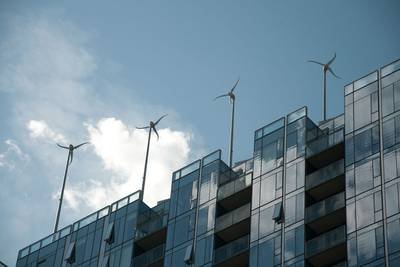
Maryland is positioned to make substantial progress in offshore wind energy deployment starting in 2026, led primarily by the US Wind project off the state’s Atlantic coast. This multi-phase initiative is designed to ultimately provide approximately 1.7 to 1.8 GW of renewable energy capacity. The initial MarWin phase, expected to generate between 248 and 300 MW, is projected to become operational in 2025–2026, followed by the Momentum Wind phase, which will contribute an additional 808 MW. These early developments will supply clean electricity to hundreds of thousands of households, create thousands of jobs, and strengthen Maryland’s offshore wind supply chain, including targeted investments in port infrastructure and local fabrication facilities. While federal and state permits have been secured, the project faces ongoing legal challenges and opposition from coastal communities concerned about environmental impacts and tourism.
In contrast, Ørsted’s Skipjack offshore wind projects, which were initially slated for 2026 deployment, have largely been scaled back or canceled due to financial and market pressures. As a result, US Wind remains the primary driver of Maryland’s near-term offshore wind capacity. The state’s long-term energy strategy targets approximately 8.5 GW of offshore wind by 2031, contributing to Maryland’s broader goal of achieving 100% clean electricity by 2035. These targets underscore Maryland’s commitment to decarbonizing its electricity grid while promoting economic development through the growth of renewable energy infrastructure.
Looking beyond 2026, Maryland plans to expand offshore wind capacity through additional phases of the US Wind project and future procurement rounds. These efforts will be supported by workforce development initiatives, continued infrastructure investment, and enhanced supply chain capabilities. Although regulatory uncertainties, legal disputes, and market dynamics present potential challenges, the 2026–2030 period represents a critical phase in establishing a robust and sustainable offshore wind industry in the state. These developments will position Maryland as a regional leader in offshore wind and a model for integrating large-scale renewable energy into the broader energy system.
Commercial electric vehicle (EV) charging infrastructure in Maryland in 2026 and beyond is transitioning from foundational planning into expanded deployment backed by structured federal and state policy, funding, and measurable market growth. Maryland’s implementation of the National Electric Vehicle Infrastructure (NEVI) Program leverages approximately $63 million in federal formula funding (FFY 2022–2026) to strategically install DC fast chargers along designated Alternative Fuel Corridors, with over 30 project awards already made, totaling more than 166 fast‑charging ports statewide and additional rounds of proposals scheduled through March 2026 to complete corridor build‑out. Maryland’s NEVI strategy mandates targeted siting along key interstates with criteria such as spacing no more than 50 miles apart and a minimum number of charging ports per station, ensuring the commercial network supports seamless travel and public reliability requirements.
Beyond federal corridor funding, Maryland is actively deploying complementary state grant and partnership programs to expand commercial and community charging in urban, rural, and underserved locations. The Maryland Department of the Environment has allocated more than $5 million in EVSE grants for workplace and transportation corridor chargers, while local electric cooperatives and private partners are installing Level 3 fast chargers at retail and community sites to address demand growth — a response to a nearly 16 percent increase in registered EVs in the state, with the total approaching 148,000 vehicles and more than 5,300 charging stations statewide as of late 2025. Additionally, multi stake holder initiatives like the Maryland Equitable Charging Infrastructure Partnership have secured tens of millions in federal discretionary funding to further extend commercial charging access across the state, bolstering economic development and workforce training opportunities.
Looking ahead, Maryland’s forthcoming Zero Emission Vehicle Infrastructure Plan (ZEVIP) — anticipated in early 2026 — will provide a comprehensive roadmap for EV charging through the next decade, integrating NEVI, discretionary grants, utility coordination, performance standards, and infrastructure deployment for light‑, medium‑, and heavy‑duty vehicles statewide. The ZEVIP is designed to support Maryland’s Climate Solutions Now Act goals and the projected increase in EV adoption, creating a more resilient and commercially viable network that aligns public objectives with private capital and operational models. As Maryland scales this infrastructure, commercial developers and stakeholders will find a data‑rich and policy‑aligned environment to pursue investments that support robust charging demand, equitable access, and long‑term economic and environmental outcomes. Commercial property owners and stakeholders seeking to evaluate the integration of EV infrastructure into their facilities are encouraged to complete a contact form, after which a dedicated specialist will provide a detailed consultation within 24 hours.