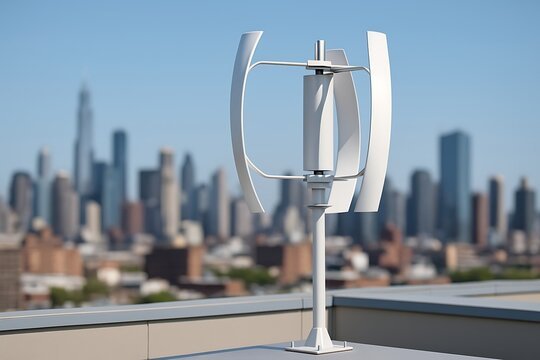
Vertical Axis Wind Turbines
Building commercial vertical axis wind turbines (VAWTs) offers business leaders a strategic advantage in distributed energy generation. Unlike traditional horizontal-axis systems, VAWTs can capture wind from any direction without complex yaw mechanisms, making them exceptionally well-suited for urban, industrial, and rooftop environments. For CEOs focused on operational efficiency and long-term asset performance, this translates into lower mechanical complexity, reduced maintenance requirements, and improved uptime. In environments where wind patterns are turbulent and inconsistent—such as around commercial buildings or industrial parks—VAWTs maintain stable performance, turning previously underutilized airflow into a predictable energy asset.
A second major advantage is installation flexibility and space optimization. VAWTs operate efficiently at lower wind speeds and can be installed closer to the ground, reducing structural reinforcement costs and simplifying permitting in many jurisdictions. For business owners managing warehouses, data centers, manufacturing facilities, or commercial campuses, this means energy generation can occur directly on-site without requiring expansive land commitments. Compared to large-scale systems like those used in traditional wind farms, VAWTs offer a decentralized model that enhances energy independence, mitigates exposure to volatile utility pricing, and strengthens ESG positioning—an increasingly critical factor for investors and stakeholders.
Finally, commercial VAWTs provide a powerful branding and financial narrative. On-site renewable generation demonstrates measurable commitment to sustainability, differentiating your company in competitive markets and supporting carbon reduction targets. While global wind leaders such as Vestas and Siemens Gamesa focus heavily on utility-scale horizontal turbines, the vertical axis market represents a growing opportunity for forward-thinking organizations to lead in distributed clean energy innovation. Investing in VAWT infrastructure is not simply an operational upgrade—it is a strategic move that enhances resilience, strengthens brand equity, and positions your enterprise at the forefront of the energy transition.
Investing in commercial vertical axis wind turbines (VAWTs) can be appealing due to their compact footprint and omni-directional wind capture, but there are operational considerations that leaders must weigh. First, efficiency remains a key limitation. Compared to traditional horizontal axis turbines, VAWTs generally produce less power per square meter of rotor area. For businesses aiming for maximum energy output from limited rooftop or urban space, this lower efficiency can translate into longer ROI timelines. It’s essential for decision-makers to carefully evaluate projected energy yields against capital expenditures to ensure alignment with corporate sustainability and financial goals.
Maintenance and durability present another challenge. VAWTs often experience higher wear on components such as bearings and shafts due to constant cyclic stress from turbulent urban winds. For organizations, this can mean increased maintenance costs and potential downtime, which impacts operational predictability. Partnering with suppliers that offer robust engineering solutions and proactive monitoring systems can mitigate these risks, ensuring reliability while minimizing unplanned expenses.
Finally, the relatively limited track record of commercial-scale VAWTs compared to their horizontal counterparts introduces a level of market uncertainty. While the technology shows promise in urban and low-wind applications, long-term performance data is still emerging. Business leaders can leverage this as an opportunity: by working with experienced vendors who combine VAWT innovation with proven engineering support, companies can position themselves at the forefront of sustainable energy adoption while reducing technological risk. Thoughtful planning and strategic partnerships transform potential cons into competitive advantages, allowing organizations to align sustainability initiatives with tangible business value.