
Iowa
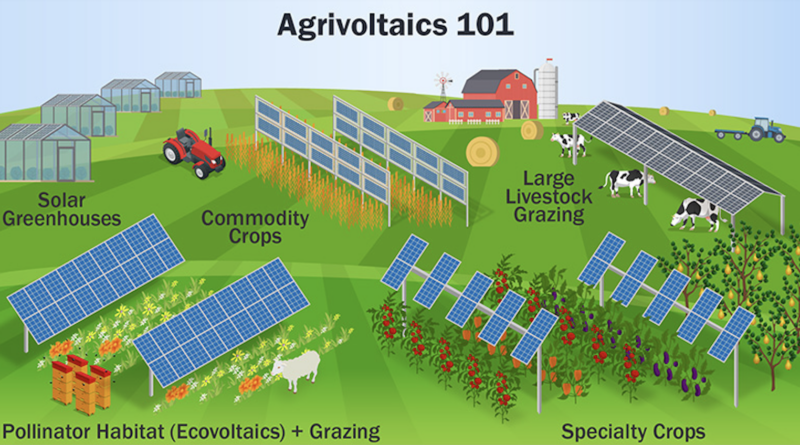
Iowa is moving toward expanding commercial solar development while trying to balance agricultural and community impacts. The Iowa Utilities Commission has approved a major solar build‑out with MidAmerican Energy, authorizing 800 MW of new utility‑scale solar capacity — the largest such approval in state history — which will bring more solar farms to the state and create more opportunities for energy generation on agricultural lands in the coming years.
State lawmakers in the 2025–2026 legislative session have been advancing bills to establish a formal community solar program. House File 404 (originating from HSB 81) and companion legislation such as HSB 629 / SSB 3092 would create a legal framework for community solar facilities, allowing customers — including farmers, rural landowners, and residents — to subscribe to solar projects and receive credits on their utility bills based on the energy generated. These bills also include provisions for project siting, interconnection rules, and decommissioning plans so landowners aren’t left with cleanup costs after a project ends.
The proposed community solar legislation is designed to encourage small‑scale solar generation on brownfield sites or underutilized land, offer Iowa electric customers more energy choices, and diversify income sources for farmers without forcing them to turn large tracts of prime farmland into solar arrays. The plans give rural electric cooperatives flexibility in participation, support multiple meters on farm operations, and aim to strengthen local control over where and how these systems are developed.
At the local level, some cities (like Davenport) are taking time to refine zoning and land‑use rules before allowing new solar farms, illustrating how municipalities are weighing solar development against housing, farmland preservation, and community preferences. Overall, Iowa’s approach through 2026 and beyond blends utility‑scale expansions, new community solar policies, and updated local planning processes to guide commercial solar development in a way that supports energy growth while addressing farming and residential concerns.
Iowa is a national leader in wind energy, thanks to its abundant wind resources and strong state policies supporting renewable energy development. The state hosts numerous large-scale commercial wind farms, including the Highland Wind Energy Center, Crystal Lake Wind Farm, and Pioneer Prairie Wind Farm, collectively generating thousands of megawatts of electricity. Utilities like MidAmerican Energy have heavily invested in wind, operating thousands of turbines across multiple counties, which supply clean energy to millions of homes while providing local economic benefits such as land lease payments and tax revenues.
Commercial wind development in Iowa continues to grow with projects under construction or planning stages, such as the Humboldt Wind Farm, Lake Mills Wind Project, and Worthwhile Wind Energy Center. These new developments aim to expand the state’s renewable energy capacity while leveraging long-term power purchase agreements with utilities and corporations. In addition to energy production, these projects bring jobs, infrastructure improvements, and increased tax revenues to rural communities, making wind a significant driver of Iowa’s economic development.
Despite strong support, commercial wind development in Iowa also faces local challenges, including siting restrictions and temporary moratoria in some counties. Communities weigh the economic benefits against concerns about noise, visual impact, and environmental effects. Nevertheless, Iowa’s favorable geography, continued utility investment, and policy framework ensure that wind energy remains a cornerstone of the state’s electricity supply, contributing to affordable energy prices and positioning Iowa as a model for large-scale renewable energy integration in the United States.
Electric vehicle (EV) charging infrastructure in Iowa is undergoing significant expansion through coordinated federal, state, local, and utility-led initiatives, with major developments expected through 2026 and beyond. The National Electric Vehicle Infrastructure (NEVI) Formula Program is a cornerstone of this effort, providing Iowa with over $51 million in federal funding to develop a network of high-power DC fast-charging stations along critical interstate corridors, including Interstates 29, 35, 80, and 380. In the initial funding round, the Iowa Department of Transportation (Iowa DOT) awarded approximately $16.2 million, matched with private contributions, for 28 new charging sites designed to include multiple charging ports and convenient access near interstate exits. These projects are currently in the planning and pre-development stages, with construction anticipated to advance through 2025 and 2026 once federal guidance and funding obligations are finalized.
At the municipal level, cities are investing in EV infrastructure to expand access within communities. For example, the City of Dubuque has secured nearly $1.9 million in federal Charging and Fueling Infrastructure grant funding to install a combination of Level 2 and DC fast chargers at multiple downtown locations. These stations, expected to be operational by late 2025, will enhance local sustainability efforts, provide convenient charging for residents and visitors, and complement the broader statewide expansion of EV infrastructure.
Utility-led efforts further strengthen Iowa’s EV charging network. MidAmerican Energy is actively expanding its network of direct current fast chargers across rural and urban communities, with installations at grocery stores, gas stations, and shopping centers. These chargers support long-distance travel and everyday EV use while benefiting from ongoing upgrades to improve reliability, accessibility, and network management. Collectively, these federal, local, and utility initiatives are establishing a comprehensive EV charging ecosystem that supports increased adoption and convenient access throughout Iowa. If you are interested in learning more or participating in upcoming EV charging projects, be sure to fill out our contact form, and one of our EV specialists will reach out to you within 24 hours.