Georgia
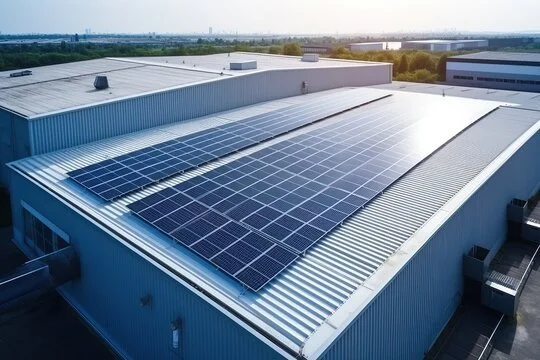
Georgia’s current energy landscape embraces commercial solar development as a growing and strategic component of the state’s utility and economic plans, offering meaningful opportunities for business owners and corporate leaders contemplating renewable energy investments. Major utilities like Georgia Power have received regulatory approval to significantly expand solar capacity via programs like the Clean and Renewable Energy Subscription (CARES), which includes multiple utility-scale solar power purchase agreements (PPAs) and targets thousands of megawatts of new solar generation through competitive bids — with additional Requests for Proposal anticipated in 2026. These initiatives reflect a broader commitment to integrate more clean energy into Georgia’s generation mix while enabling commercial and industrial customers to participate in scalable renewable energy solutions.
From a policy and incentives standpoint, Georgia intersects federal support with its own regulatory framework to encourage commercial solar deployment. Businesses can leverage the federal Investment Tax Credit (ITC) for solar — currently allowing a 30% credit on qualifying solar installations — along with accelerated depreciation and Production Tax Credit (PTC) structures that materially improve project economics. Programs like USDA’s Rural Energy for America Program (REAP) also offer grant and loan support for eligible commercial and agricultural energy projects, while utility-specific net metering (or net billing) policies enable commercial systems to earn credits for excess generation. These financial incentives not only lower upfront capital requirements but also improve long‑term ROI models for solar assets.
For business owners and CEOs evaluating renewable strategies, Georgia’s approach presents both stability and growth potential. The regulatory environment is pragmatic: while the state itself does not yet offer extensive state‑level solar rebates, it maintains clear interconnection standards and third‑party ownership rules that facilitate diverse deployment models — including PPAs, leases, and direct ownership — that can be tailored to corporate sustainability goals and balance sheet preferences. Coupled with federal and local incentives, this framework makes Georgia an attractive market for commercial solar development, particularly for organizations aiming to reduce operating costs, hedge against energy price volatility, and demonstrate leadership in ESG and decarbonization efforts.
We welcome solar developers, technology partners, and installation firms seeking strategic collaboration in Georgia’s evolving renewable energy sector. With forthcoming utility solicitations, expanding corporate demand for clean energy, and evolving community solar pathways, there is ample opportunity to establish long‑term partnerships that deliver reliable, cost‑effective solar assets across sectors. By aligning expertise with Georgia’s commercial energy objectives, innovators can help businesses achieve aggressive sustainability targets while contributing to robust economic growth in the Southeast’s solar marketplace.
In 2026 and moving forward, the state of Georgia’s stance on commercial wind turbine development remains cautious but gradually more open, shaped largely by utility planning and renewable energy policy rather than explicit legislative mandates. Historically, Georgia hasn’t had any significant utility‑scale wind farms—its wind speeds inland are relatively low compared with traditional wind states, making commercial wind less competitive on its own so far. As a result, most of the recent renewable build‑out in the state has focused on solar and battery storage, not wind, and Georgia Power’s energy mix reflects that priority, with wind making up a very small portion of installed capacity relative to solar and other resources.
However, the 2025 Integrated Resource Plan (IRP) approved by the Georgia Public Service Commission marks a shift in how wind is treated in long‑term energy planning. For the first time, wind energy appears in all modeled scenarios for future resource mixes, with analyses showing potential for up to roughly 4,000–4,500 MW of renewable resources—including wind—to be procured or developed by 2035 and beyond. This doesn’t guarantee commercial wind projects will be built, but it signals a willingness to consider wind alongside solar and storage in competitive procurements.
Looking ahead, the future outlook for commercial wind in Georgia depends on both market economics and policy conditions. Because onshore wind potential in much of Georgia is modest, wind may compete best when paired with storage or as part of diversified renewable portfolios that help utilities meet growth and reliability needs. Broader studies suggest the state has several gigawatts of theoretical wind potential, particularly if technology improves or offshore development becomes viable, but actual project development will hinge on cost competitiveness, transmission availability, and how utilities and investors respond to federal incentives and state planning signals.
Georgia is actively working on expanding its commercial electric vehicle (EV) charging infrastructure through 2026 and beyond as part of a broader strategy to support EV adoption across the state. A major initiative driving this effort is the National Electric Vehicle Infrastructure (NEVI) Program, funded by the federal Infrastructure Investment and Jobs Act. Georgia has been allocated approximately $135 million in NEVI funds to build a continuous network of fast‑charging stations along federally designated Alternative Fuel Corridors such as I‑75, I‑85, I‑95, and other major routes. These funds are being used in a series of public‑private partnership projects where private companies design, install, finance, operate, and maintain the charging stations in exchange for federal support; the latest round awarded $24.4 million for 26 new DC fast‑charging sites, each with multiple high‑power chargers capable of rapid recharges and 24/7 operation. This strategy aims to close gaps in the network, especially in rural and underserved areas, and provide reliable access roughly every 50 miles along key corridors. (ecmweb.com)
In addition to deploying highway chargers, Georgia’s long‑term planning includes expanding infrastructure in urban, suburban, and destination locations such as retail centers, hotels, and tourist attractions to better serve the growing number of EV drivers across the state. The state’s Electric Mobility Innovation Alliance (EMIA) plays a role in coordinating policy and infrastructure development recommendations that support this broad expansion and enhance EV use beyond major travel routes. Georgia already ranks high in the Southeast for publicly accessible charging stations per capita, and continued investment is intended to maintain that leadership and keep pace with rising EV adoption. (georgia.org)
Georgia also supports commercial EV charging through state tax incentives and utility programs designed to reduce costs and attract private investment. Businesses can qualify for an income tax credit of up to 10 % of the cost (capped at $2,500) for purchasing and installing qualified EV chargers, which encourages commercial deployments that benefit both residents and visitors. In the utility sector, programs such as Georgia Power’s Make‑Ready Program provide funding and infrastructure assistance to prepare sites for EV chargers, reducing the upfront cost burden for commercial and public installations. Together with federal NEVI funding and planning efforts, these incentives are helping shape a comprehensive and sustainable EV charging network in Georgia. If you are interested in learning more or exploring potential opportunities, please contact us — we would love to speak with you about next steps and how you can get involved in supporting this growing EV ecosystem.